1 Day 1 Night
Educational Village Homestay
IDR 250.000
08 July 2026
Tradition
141 times
The word wiwitan comes from the Javanese word wiwit, which means "to begin" or "the beginning." In the context of agriculture, wiwitan refers to the beginning of the harvest. This tradition dates back to the time of ancient Javanese communities, whose livelihoods depended heavily on farming. Before the arrival of the major religions in the Indonesian archipelago, the Javanese practiced animism and dynamism. They believed that nature possessed spiritual powers that should be respected in order to ensure abundant harvests. From these beliefs emerged various rituals expressing respect for nature and prayers for safety and prosperity.
During the Hindu-Buddhist period, the Wiwitan tradition gradually incorporated more structured religious values. Later, as Islam spread across Java—especially through the teachings of the Wali Songo (the Nine Saints)—Wiwitan underwent a process of cultural acculturation. Offerings that had previously been dedicated to nature spirits were gradually replaced with prayers to Allah (SWT), the recitation of tahlil, shalawat (blessings upon the Prophet Muhammad), and communal prayers as expressions of gratitude. Today, Wiwitan stands as a living example of how local traditions can adapt to religious and social changes while preserving their cultural identity.
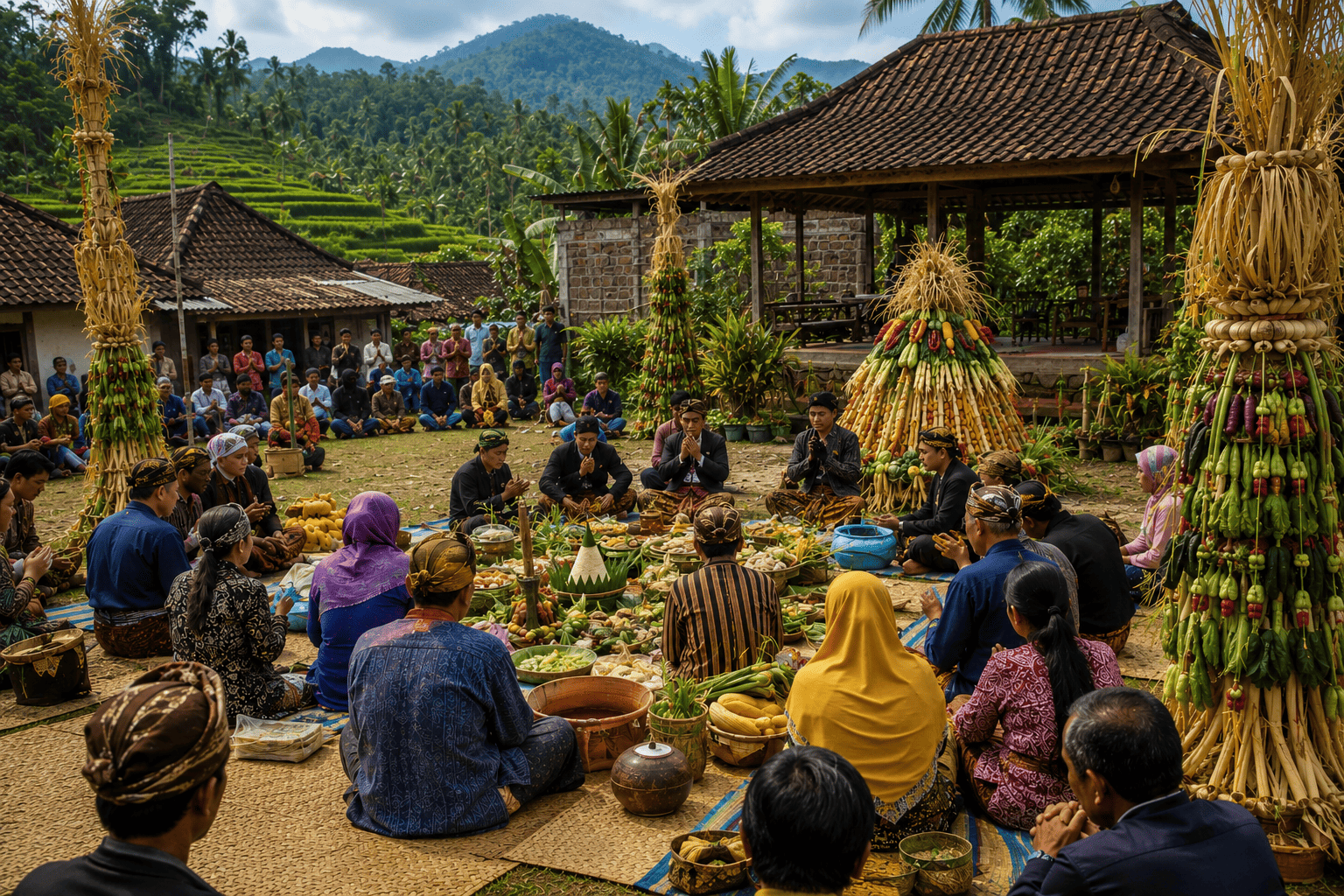
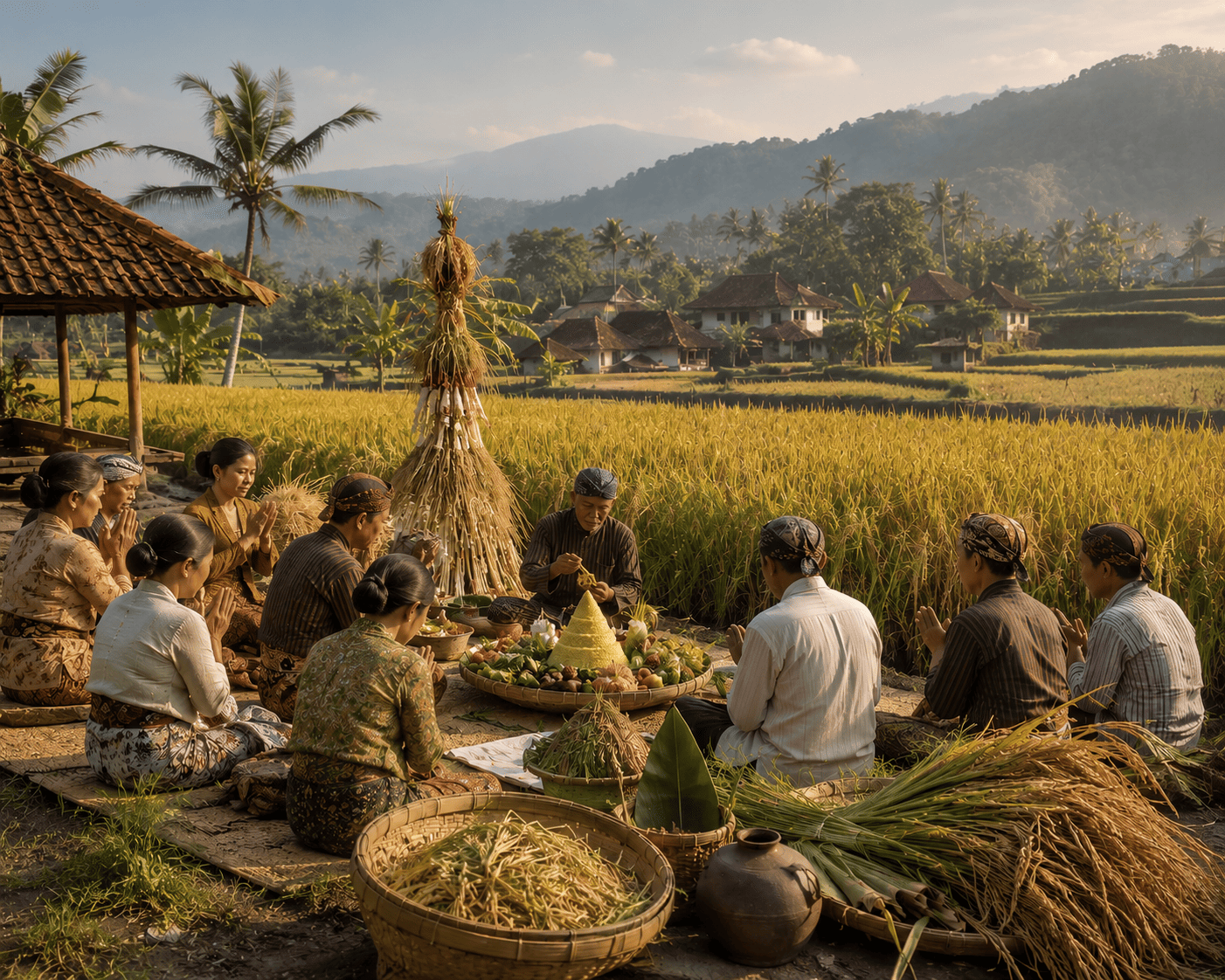
The Wiwitan ceremony is usually held when the rice has turned golden and is ready to be harvested. Before harvesting begins, the owner of the rice field invites family members, neighbors, and community elders to participate in a communal prayer. The ceremony generally includes the following stages:
Behind its simple ceremony, Wiwitan embodies profound philosophical values.
The primary meaning of Wiwitan is gratitude for the harvest bestowed by Almighty God. Farmers recognize that a successful harvest is not solely the result of human effort but also a blessing and gift from God.
Wiwitan teaches that humans are part of nature rather than its absolute rulers. Therefore, nature should be protected, cared for, and used wisely to ensure its sustainability for future generations.
The tradition strengthens social bonds within the community. Praying together, sharing meals, and helping one another during the harvest reflect the spirit of gotong royong (mutual cooperation), a defining characteristic of Javanese society.
A harvest is the result of a long journey—from preparing the land, planting, and nurturing the crops to finally reaping the rewards. Wiwitan teaches that success requires patience, perseverance, diligence, and hard work.
Javanese philosophy emphasizes harmony between humans and God (hablum minallah), humans and fellow humans (hablum minannas), and humans and nature. Wiwitan symbolizes the balance among these three relationships.
Various items used in the Wiwitan ceremony carry symbolic meanings.
The Wiwitan tradition contains many values that remain relevant in modern society, including:
Wiwitan is one of the cultural heritages of the Javanese people that reflects the harmonious relationship between humans, nature, and God. More than just a pre-harvest ritual, it embodies philosophical values that promote gratitude, togetherness, hard work, environmental stewardship, and the preservation of cultural traditions.
In today's modern era, Wiwitan serves as a reminder that technological progress should not erase the cultural roots that have shaped society's character. By preserving the Wiwitan tradition, communities not only safeguard the legacy of their ancestors but also uphold timeless values that continue to be relevant in contemporary life.
Merti Bumi is a Javanese cultural tradition that has been passed down through generations for centuries. The word "merti" derives from Javanese and signifies m

Asisten AI Desa Wisata Gabugan