1 Day 1 Night
Educational Village Homestay
IDR 250.000
08 July 2026
Tradition
147 times
Merti Bumi is one of the traditional cultural ceremonies of the Javanese people that has been passed down from generation to generation for hundreds of years. The word "merti" comes from the Javanese language, meaning to preserve, maintain, or care for, while "bumi" means the earth or the land where people live. Therefore, Merti Bumi can be understood as a community's effort to care for, express gratitude to, and honor the earth as the source of life.
This tradition dates back to the ancient agrarian communities of Java, when people's livelihoods depended heavily on agriculture. Before the arrival of the major religions in the Indonesian archipelago, the Javanese practiced indigenous beliefs that revered the forces of nature and the spirits of their ancestors. They believed that harmony among humans, nature, and the Creator had to be maintained to ensure a peaceful life and abundant harvests.
With the arrival of Hinduism, Buddhism, and later Islam, the Merti Bumi tradition underwent a process of cultural acculturation. Elements of the older beliefs blended with the values of the newer religions without diminishing the tradition's essential meaning—as an expression of gratitude to Almighty God for His blessings and abundance.
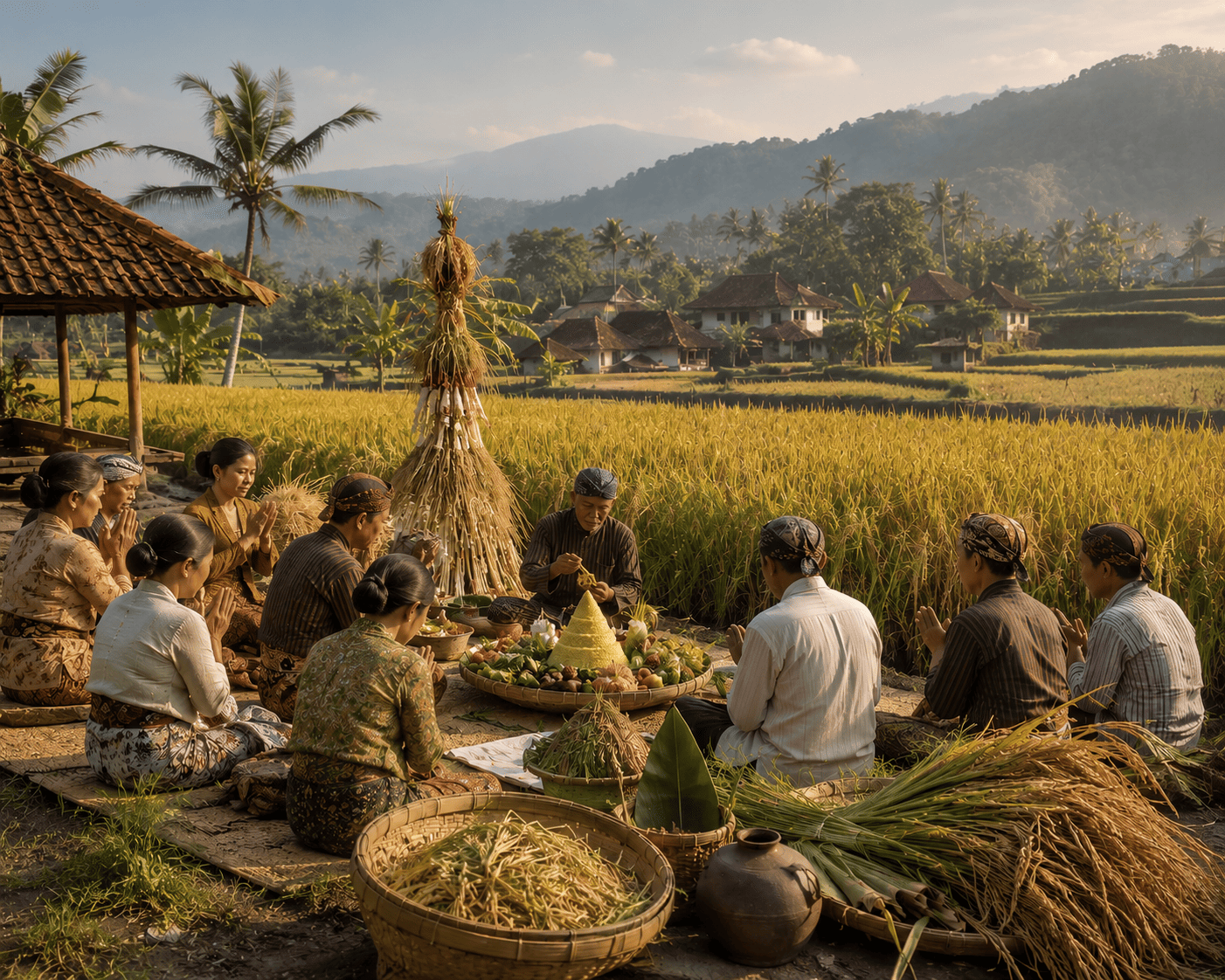
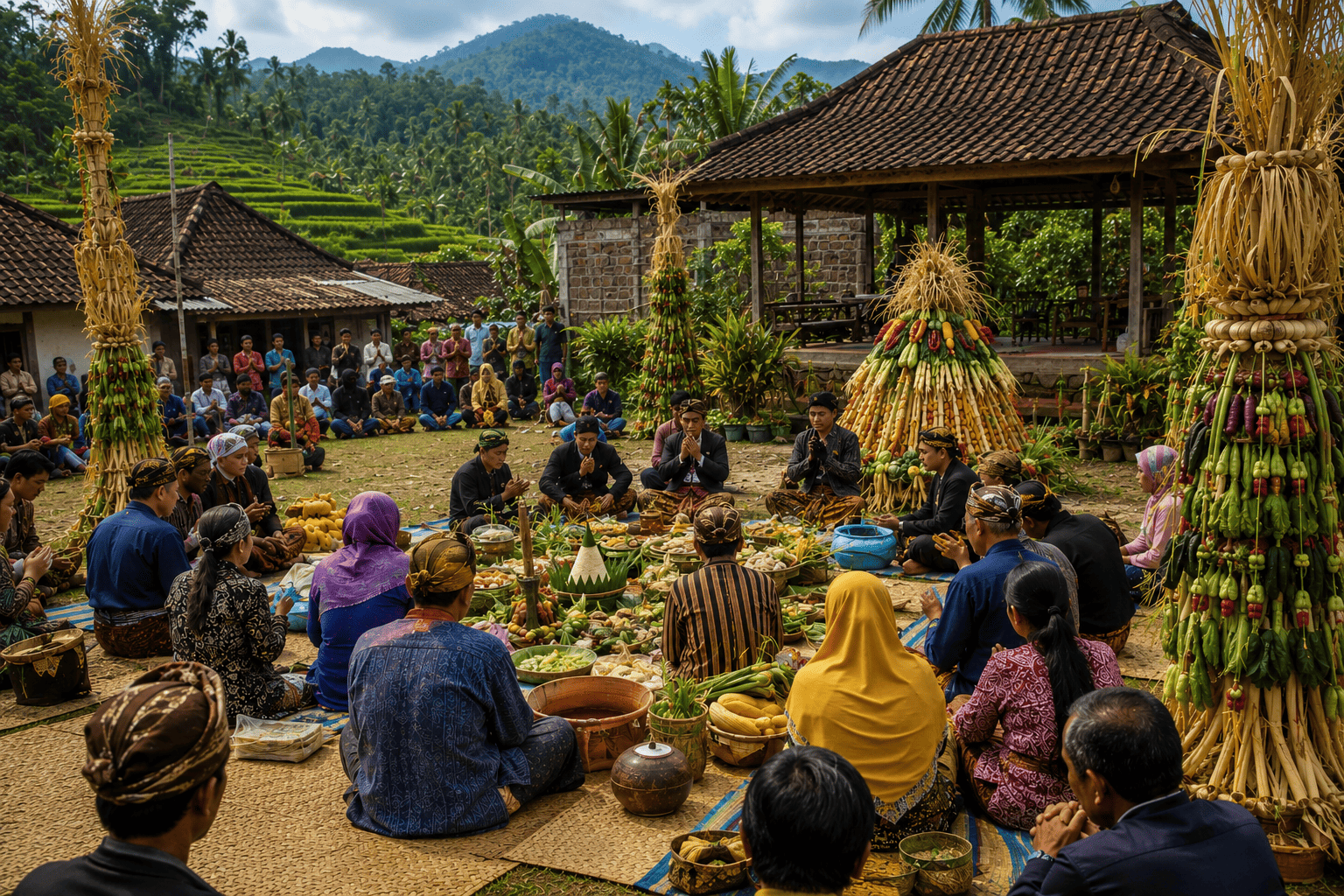
Today, Merti Bumi continues to be celebrated in various regions of Central Java, the Special Region of Yogyakarta, East Java, and several other areas under different names and with varying customs. The ceremony is generally held after the harvest season or at specific times determined by local communities. Activities commonly include communal prayers, cultural parades, traditional art performances, kenduri (communal thanksgiving feasts), and the distribution of agricultural produce to community members.
Beyond being a customary tradition, Merti Bumi has also become an important part of cultural preservation and a cultural tourism attraction, introducing the values of local wisdom to younger generations and the wider public.
Merti Bumi embodies a profound philosophy concerning the relationship between humans, God, nature, and fellow human beings. The tradition teaches that humans are not the rulers of nature but rather a part of it, bearing the responsibility to preserve and protect its sustainability.
The primary meaning of Merti Bumi is to express gratitude to Almighty God for the harvest, sustenance, health, and life that He has bestowed. Through communal prayers, people ask for continued blessings, safety, and more abundant harvests in the future.
The earth provides all the necessities of human life, including food, water, and shelter. Therefore, Merti Bumi emphasizes the importance of protecting the environment, using natural resources wisely, and preventing environmental damage that could disrupt ecological balance.
The preparation and implementation of Merti Bumi involve the active participation of the entire community. The spirit of gotong royong (mutual cooperation) is reflected in activities such as cleaning the environment, preparing food, decorating the venue, and organizing cultural processions. These activities strengthen solidarity, brotherhood, and social responsibility within the community.
Merti Bumi is a form of respect for the cultural legacy of the ancestors. By preserving this tradition, communities maintain their cultural identity while passing down noble values to future generations so that they are not lost in the face of modernization.
Javanese philosophy embraces the concept of harmonious relationships between humans and God, humans and one another, and humans and nature. Merti Bumi symbolizes the importance of maintaining this balance in order to create a peaceful, prosperous, and sustainable life.
The Merti Bumi tradition embodies many noble values that remain relevant today, including:
Merti Bumi is more than just a traditional ceremony; it is a representation of the local wisdom of the Javanese people, emphasizing gratitude, environmental stewardship, mutual cooperation, and respect for ancestral cultural heritage. In the midst of rapid modernization, this tradition continues to hold significant meaning by reminding people that human well-being depends greatly on the sustainability of the earth. Therefore, preserving Merti Bumi is not only about safeguarding a cultural tradition but also about strengthening the nation's cultural identity and fostering greater awareness of the importance of protecting the environment for a sustainable future.
Wiwitan comes from the Javanese word wiwit, which means "to begin" or "the beginning." In the context of agriculture, wiwitan refers to the beginning of the har

Asisten AI Desa Wisata Gabugan